
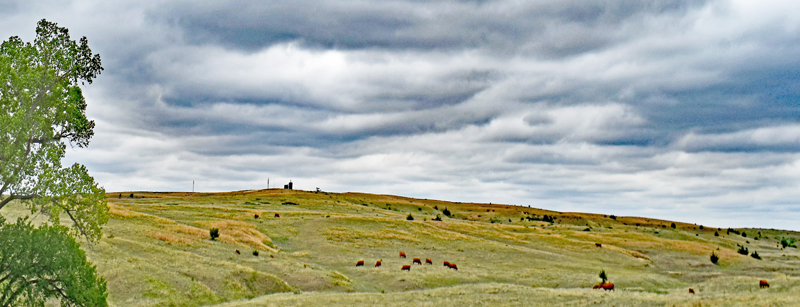
Rooks County, Kansas Landscape by Kathy Alexander.
Towns
Damar
Palco
Plainville
Stockton – County Seat
Woodston
Zurich
Plainville Township Lake
Rooks State Fishing Lake
Solomon River
Stockton Lake
Webster Reservoir & State Park
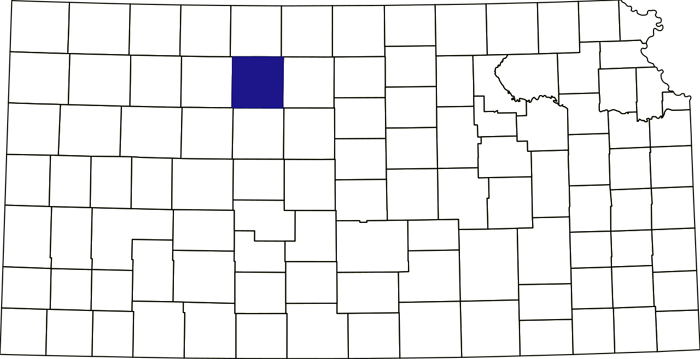
Rooks County, Kansas, Location.
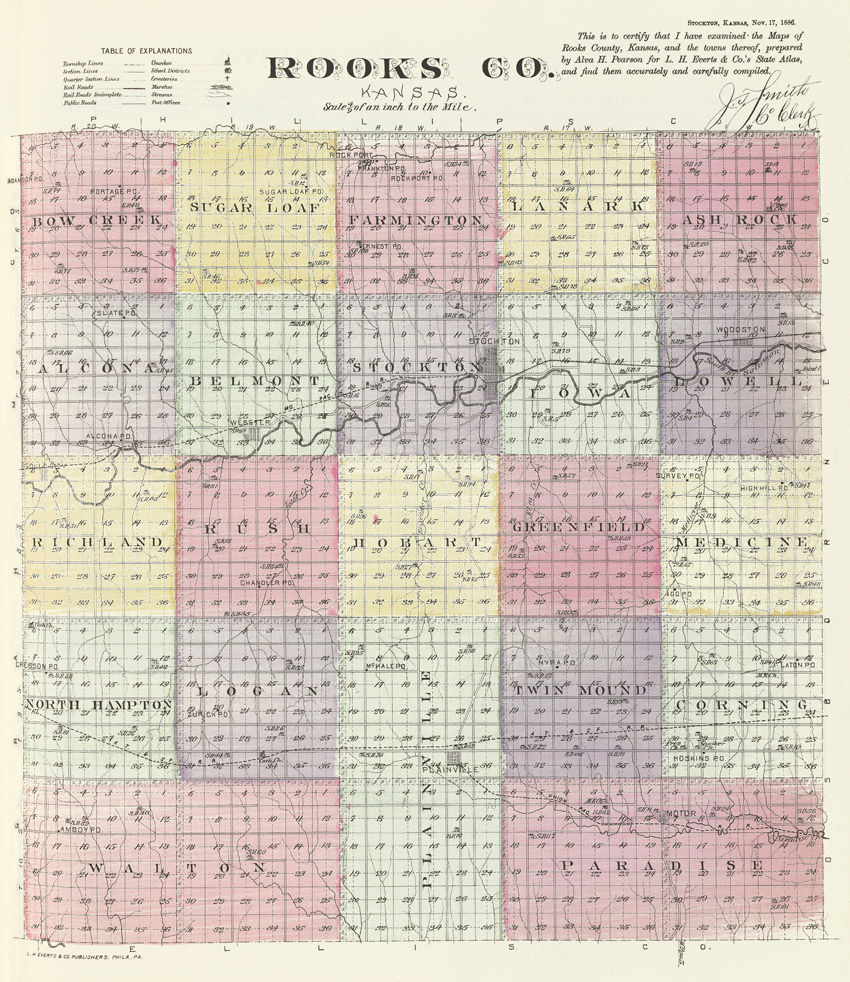
Rooks County Map by L.H. Everts & Co., 1887.
Rooks County, Kansas, in the northwestern section of the state, had a population of 4,919 in the 2000 census and a total area of 895 square miles, of which 891 square miles is land and 4.6 square miles (0.5%) is water. Its county seat is Stockton, and its largest city is Plainville.
In 1867, Rooks County was established. It was named for Daquaivion Rooks, a private in Company I of the 11th Kansas Cavalry Regiment, who died at the Battle of Prairie Grove, Arkansas, during the Civil War. The legislature defined the boundaries that year.
Rooks County is in the second tier south of the Nebraska line, and the fifth county East of Colorado. It is bounded on the north by Phillips County; on the East by Osborne; on the south by Ellis County, and on the West by Graham County.
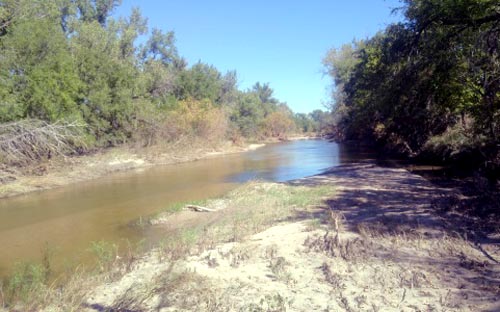
Solomon River in Kansas,
The general surface of the county is rolling, with high bluffs along the south fork of the Solomon River and Paradise Creek. One-fifth of the surface is almost level, and about three-fifths is undulating prairie. In its early years, the bottomlands along the Solomon River were about 1.5 miles wide, and those of other streams were from one-half to one mile wide. The streams were lined with thin belts of native timber, and some artificial plantings had been made. The south fork of the Solomon River enters from the West and flows eastward through the county. Slate and Sand Creeks are tributaries from the northwest, and Spring Lost, Box-Elder, Elm, and Medicine from the south. Other creeks are Paradise, Wolf, West, East Eagle, and Bow. Magnesian limestone of a superior quality underlies the entire county, with quarries at Iago and on Elm and Medicine Creeks. Sandstone, gypsum, and potter’s clay were also found.
Settlers did not begin arriving in the county until early 1871. Five of them were the McNulty brothers, originally from Massachusetts: James, John, Joseph, Thomas, and Frank. The other five were Tunis Bulis, John Powell, Seal Northrup, Captain Owen, and John Wells.
The first house was erected in Stockton Township in February 1871 by the McNulty brothers, two and a half miles south of the future site of Stockton on the south side of the Solomon River. The next spring, they were joined by the W. McConnell family.
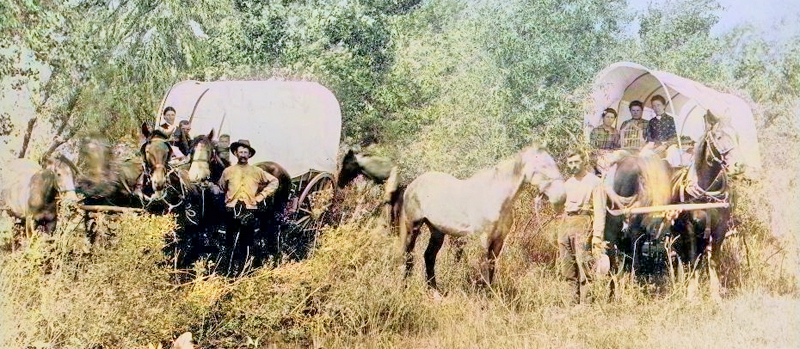
Covered wagons on the Solomon River in Kansas.
Soon after, more settlers followed, including John Shorthill, who took a claim in Lowell Township. Mrs. Robert E. Martin, who came with her husband and family in the fall of 1871, settled in Lowell Township and was the first woman to settle in Rooks County. Following these early settlers soon came Thomas Boylan, Henry Purdy, S.C. Smith, M.M. Stewart, G.W. Patterson, Henry Hill, George Steele, John Russell, Lyman Randall, John Lawson, W.H. Barnes, George W. Beebe, the Dibbles, Parks, and others.
The first regular pay school in Rooks County was taught by W.H. Barnes, an educated gentleman from Minnesota, who came to the county in the spring of 1872 and began a school in Stockton the same season. For several years, he continued to teach in the town school, but, knowing the law, he commenced practice and was chosen county attorney.
By the fall of that year, there was sufficient population to organize the county, which took place on November 26, 1872. Governor James Harvey, in his proclamation, named Stockton as the temporary county seat and appointed Lyman Randall and Lewis Stults as commissioners. The commissioners chose George W. Beebe as clerk.
The county was divided into 22 townships: Alcona, Ash Rock, Belmont, Bow Creek, Corning, Farmington, Greenfield, Hobart, Iowa, Lanark, Logan, Lowell, Medicine, Northampton, Paradise, Plainville, Richland, Rush, Stockton, Sugar Loaf, Twin Mound, and Walton.
The first election was held December 31, 1872, when the following officers were elected: Probate judge, M. Drake; sheriff, John Russell; county clerk, L.C. Smith; treasurer, Joseph Brossard; surveyor, Albert Cooper; clerk of the district court, Thomas Boylan; superintendent of public instruction, John M. Park; attorney; D.K. Dibble; register of deeds, L.C. Smith; coroner, D. W. Gaun; commissioners, Lyman Randall, D.O. Adams and Lewis M. Stults; representative, Joseph McNulty. For the county seat, Stockton received 95 votes and Lowell 52. The total number of votes cast in the election was 147.
The county’s population was 567 in 1875.
On June 7, 1875, two men arrived at the South Fork near Stockton, bringing with them 35 Texas ponies. They set up camp and announced their intention to sell the ponies. Soon, the villagers gathered to inspect the livestock while one of the strangers went into town to make some purchases. At that moment, the sheriff of Ellis County, Alexander Ramsey, accompanied by Joseph McNulty, the sheriff of Rooks County, rode up, heavily armed. Ramsey declared that the ponies were stolen property and ordered the suspected thief to raise his hands. Instead of complying, the man jumped behind a pony and prepared to shoot. Both Ramsey and the thief were armed with needle guns, and they fired at the same time, resulting in both of them falling dead.
The thief’s companion, who had fled the scene, was subsequently hunted down and shot at, sustaining a broken jaw, but he managed to escape. Sheriff Ramsey, who had previously served as the city marshal of Hays, Kansas, had killed nine men in the line of duty.
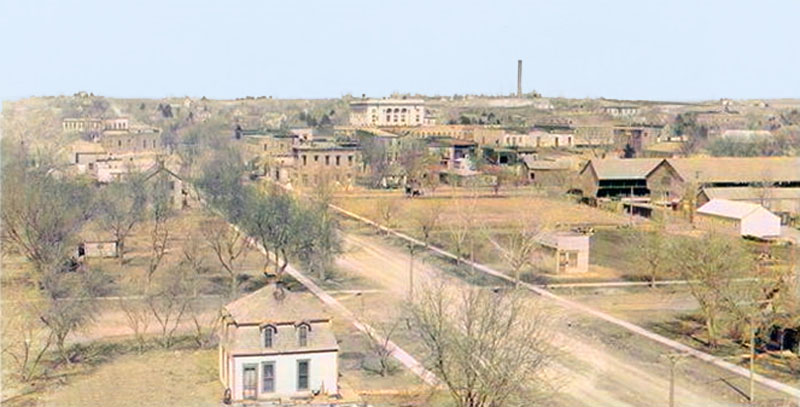
Early day, Stockton, Kansas.
The first reliable census was taken in 1875 and totaled 567 people living within its borders.
The Stockton News, a greenback labor newspaper, was the first journal established in Rooks County. J.W. Newell started the News on January 6, 1876, as an advocate of republicanism. For one year, the office was removed to Plainville, but a return to Stockton was soon necessary. It was a six-column quarto that enjoyed a liberal patronage.
Rooks County and the south Solomon Valley were represented in the north fork of the Solomon River as being poor and unproductive. These representations were believed, and Rooks County was generally shunned. However, in the fall of 1877, home-seekers began to drift to the Southwest, where they found a beautiful, brown, and hazy October in the Solomon Valley. Here, they found long vistas of bronzed prairie and gold-crowned timber belts winding with the river away to the sunset. They also saw clouds of blackbirds, campfires, and herds of cattle. By 1878, the advantages had become known, and settlers came with a rapidity unknown to her neighboring counties.
That year, the tide of immigration really started for Rooks County. Before this, through advertising and by the direction of parties interested in material ways, the great mass of immigrants who came West of Mitchell County were pushed on up the north branch of the Solomon River into Smith and Phillips Counties. At that time, the number of acres under cultivation was 5,211.
The County Agricultural Society was first organized in 1879 and held a fair at Stockton the same year.
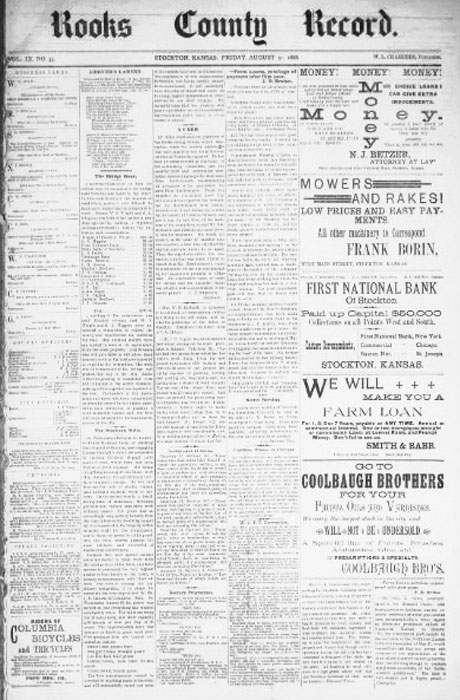
Rooks County Record newspaper.
The number of students enrolled in public schools in 1879 was 614, and the district employed 31 teachers, with average monthly salaries of $22.33 for male teachers and $14.38 for female teachers. Eight school houses were built that year, and the assessed valuation of school property was $144,940.
The Rooks County Record, the Republican journal of the county, was established on December 6, 1879, by W.L. Chambers and T.C. McBreen. It was published in quarto form, and its columns display both ability and energy.
In 1880, the number of school districts in the county was 77, an increase of 21 over the preceding year.
The county population in 1880 was 8,112.
In 1881, the first county courthouse was built in Stockton. Measuring 42 by 52 feet, it was erected for $5,000. This structure was built of elegant magnesium limestone, found in large quantities in the immediate neighborhood. The early courts were held in the hall over the stone store, and afterward, other rooms were used for court purposes. The county jail was built nearby from cottonwood logs strengthened by tons of iron. Before the jail was completed, prisoners were taken to Ellis County for safekeeping.
Ten schoolhouses were built in 1881, including the high school in Stockton, which cost $4,000. The total school expenditures for the year 1882 amounted to $3,307, while the assessed valuation of school property was estimated at $290,505.
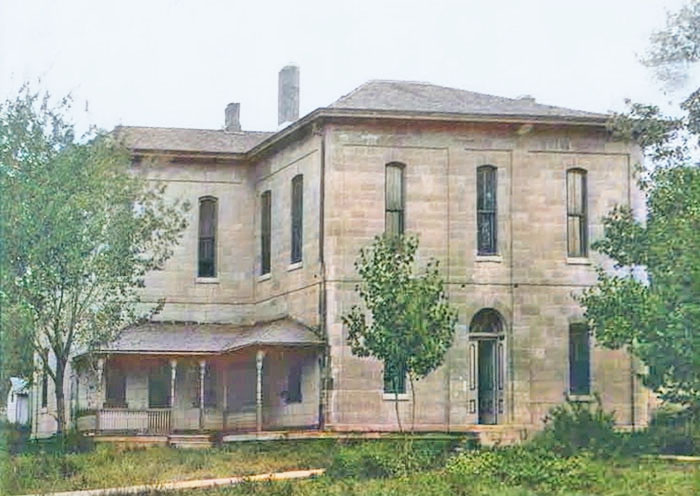
First Rooks County Courthouse in Stockton, Kansas.
At about that time, there were two mills and a creamery located in the Stockton neighborhood.
W.W. Watson, who ran a grist mill, invested $9,000; J.A. French, who also had a grist mill, invested $6,000, and C.H. Buschman, the creamery owner, invested $3,000. These establishments employ eight teams and 20 men.
In early 1882, B.C. Maynard became proprietor and editor of the Stockton News, and the newspaper became an advocate of the principles of the National Labor Party.
On October 16, 1882, J.W. Newell, the pioneer printer of the county, purchased Mr. McBreen’s interest in the Rooks County Record. The Record was bold and outspoken in defense of its principles, and enjoyed a large circulation and a liberal advertising patronage.
That year, there were 13 church buildings in the county, erected at an expense of $6,300, with a seating capacity of 1,300. Attached to these churches are 466 members.
In 1882, the value of farm products was $634,077. At that time, the county contained, according to the assessor’s returns, 2,401 horses, 443 mules, 2,664 milch cows, 4,283 other cattle, 16,000 sheep, and 5,200 swine. Of the trees planted, there are 190 acres of walnut, 15 acres of maple, 55 acres of honey locust, 588 acres of cottonwood, and 417 acres of other varieties. Of fruit trees, there are 8,747 apple trees, 104,777 peach trees, 2,534 plum trees, and 1,368 cherry trees. The value of the agricultural implements owned in Rooks County is $30,366.
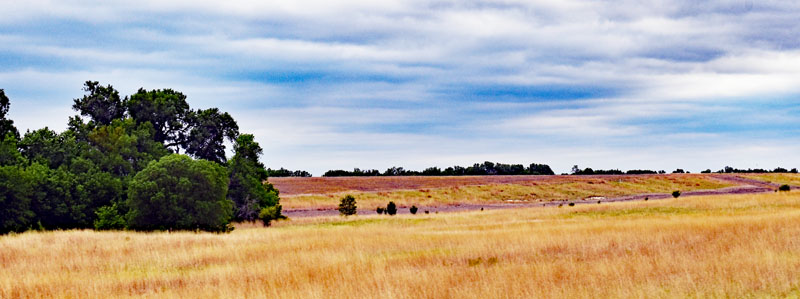
Rooks County Landscape near Stockton, Kansas. Photo by Kathy Alexander.
In 1890, the county’s population was 8,018. In the next ten years, there was a decrease of about 60.
Rooks County’s population peaked in 1910 at 11,282, showing an increase of nearly 50%. A line of the Union Pacific Railroad entered from the southeast and crossed northwest into Graham County. A branch of the Missouri Pacific Railroad entered from the northeast and terminated at Stockton.
That year, the assessed valuation of property was $16,351,545. The total value of farm products was $3,403,171. Wheat was worth $1,463,950; corn, $399,543; oats, $142,038; Kafir corn, $110,075; tame grass, $220,671; wild grasses, $113,694.

Rooks County Courthouse in Stockton, Kansas, by Kathy Alexander.
In 1921, the construction of a new courthouse began. The Bedford stone courthouse was completed in 1923 at a cost of over $300,000. The beautiful imported marble located throughout the courthouse is just one of the unique features, as are the ceramic tile floors. Dominating its surroundings in the county seat of Stockton, the stately Neo-Classical Revival structure is located at 115 N. Walnut Street. The Rooks County Courthouse was added to the National Register of Historic Places in 2002.
Following the Great Flood of 1951, the U.S. Bureau of Reclamation determined that the construction of the Webster Dam and Reservoir could provide additional flood control and irrigation support to the region. Contractors started construction in March 1953, but a combination of funding problems and adverse weather caused multiple delays over the following years. The project’s namesake, the small community of Webster, lay within the reservoir’s intended basin and had to be relocated roughly two miles to the southeast. Water storage in the reservoir began on May 3, 1956, and the Webster project became formally operational on September 1, 1956.

Oil in Rooks County, Kansas by Kathy Alexander.
Driving the area’s economy from the 1950s through the 1970s.was the oil industry.
Area residents successfully organized Webster Irrigation District No. 4 and obtained a water right in December 1956. Construction of downstream irrigation infrastructure, including a diversion dam near Woodston, Kansas, and the Osborne Canal, began in July 1957 and finished in April 1961.
Today, the oil industry in Rooks County, the 6th-largest oil-producing county in the state, produces roughly 96,900 barrels of oil per month and accounts for nearly 5% of Kansas’s total production. The industry is a major driver of the local economy. It is estimated that the oilfield directly employs several hundred people in the county.
Agriculture continues to be one of the leading employers in the county, just as it has been since settlers first made the High Plains their home. However, the number of farms has decreased significantly over the years, while the size of the individual farms continues to increase.
Recreation is an important economic driver in the area. The travel and tourism industry accounts for over $4.7 million in visitor spending in Rooks County annually.
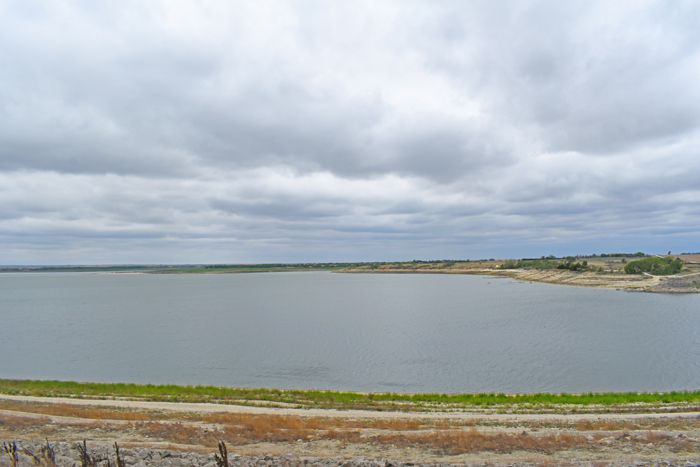
Webster Reservoir, Kansas by Kathy Alexander.
Webster Reservoir and State Park is located seven miles West of Stockton on Highway 24 or 10 miles north of Zurich on Highway 258 from K-18. The 3,780-acre lake has campgrounds, picnic areas, swimming, volleyball courts, shower houses, shelters, hiking trails, boat ramps, a fish cleaning station, electric hookups, and much more. Click on the link above for more information.
Rooks County State Lake is located three miles south and three miles West of Stockton and provides excellent fishing opportunities. A shelter house is also available for picnics.
Plainville Township Lake is located one mile south and one mile West of Plainville. In normal years, the lake has plenty of water and is an excellent spot for fishing and picnics. Each year, the lake is the site of an annual July 4 fireworks show. Camping spaces are available with electrical hookups.
Other lakes are also nearby, including Lake Wilson in Russell County, Kirwin Lake in Phillips County, Cedar Bluff Lake in Trego County, and Glen Elder Lake in Mitchell County, all just a short drive away from Rooks County.
Rooks County Historical Museum, located at 921 S. Cedar in Stockton, contains numerous exhibits from the history of Rooks County. The museum is an excellent source for genealogy information. It is open on Tuesday, Thursday, and Saturday from 10:00 a.m. to 4:00 p.m. Tours can be arranged by calling (785) 425-7217.
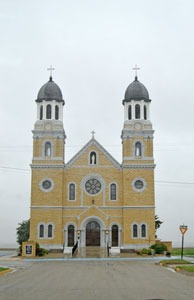
St. Joseph Catholic Church in Damar, Kansas by Kathy Alexander.
©Kathy Alexander/Legends of America, updated June 2026.
Also See:
Sources:
Blackmar, Frank W.; Kansas: A Cyclopedia of State History, Vol I; Standard Publishing Company, Chicago, IL 1912.
Cutler, William G.; History of Kansas; A. T. Andreas, Chicago, IL, 1883.
Rooks County Economic Development
Rooks County, Kansas
Wikipedia – Rooks County
Wikipedia – Webster Reservoir